

Vintage Engagement Rings Buying Guide
Vintage engagement rings offer something that newly made designs often cannot: genuine character, distinctive craftsmanship and details shaped by the period in which they were made.
The best ring is not necessarily the oldest or the most elaborate. It should be well made, in good condition and suitable for the way it will be worn. Before buying, check the setting, stone security, resizing options and whether the ring will sit comfortably alongside a wedding band.

Expert reviewed
Reviewed by Rachel Smith
Manager and Head Valuer at Hatton Jewels
Rachel Smith specialises in the valuation and appraisal of fine jewellery, antique jewellery, natural pearls, coloured gemstones and old cut diamonds. This guide has been reviewed to ensure the advice is accurate, practical and aligned with what buyers should look for when choosing antique jewellery.
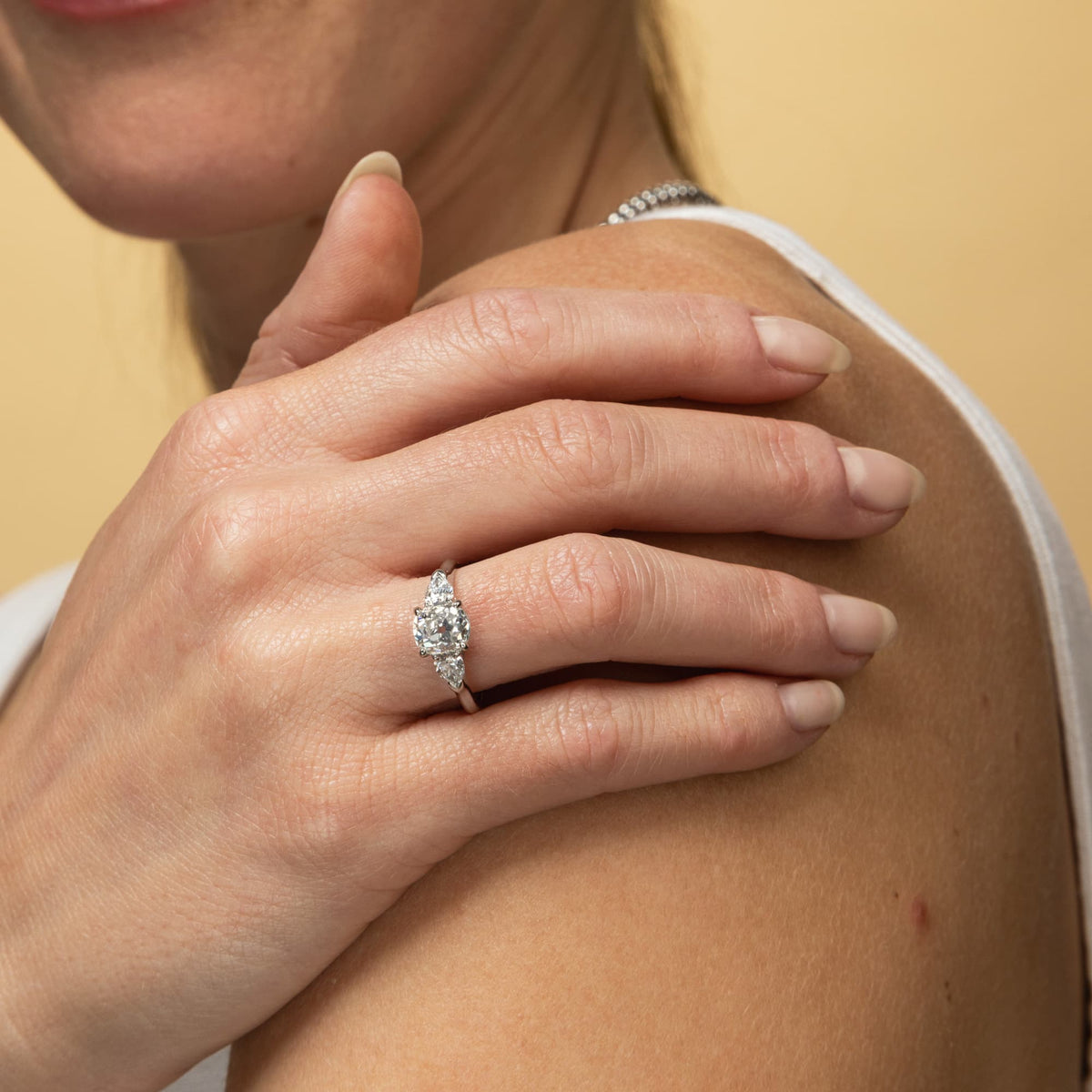
What Is a Vintage Engagement Ring?
A vintage engagement ring is generally between 20 and 99 years old. Once a piece reaches 100 years old, it is usually described as antique.
The term is sometimes also used for newly made rings inspired by historic designs. These are more accurately described as vintage-style or vintage-inspired engagement rings.
Both can be beautiful choices, but they are different. A genuine vintage ring has already lived through part of its history, while a vintage-inspired ring gives you the appearance of an older design with a newly made setting.
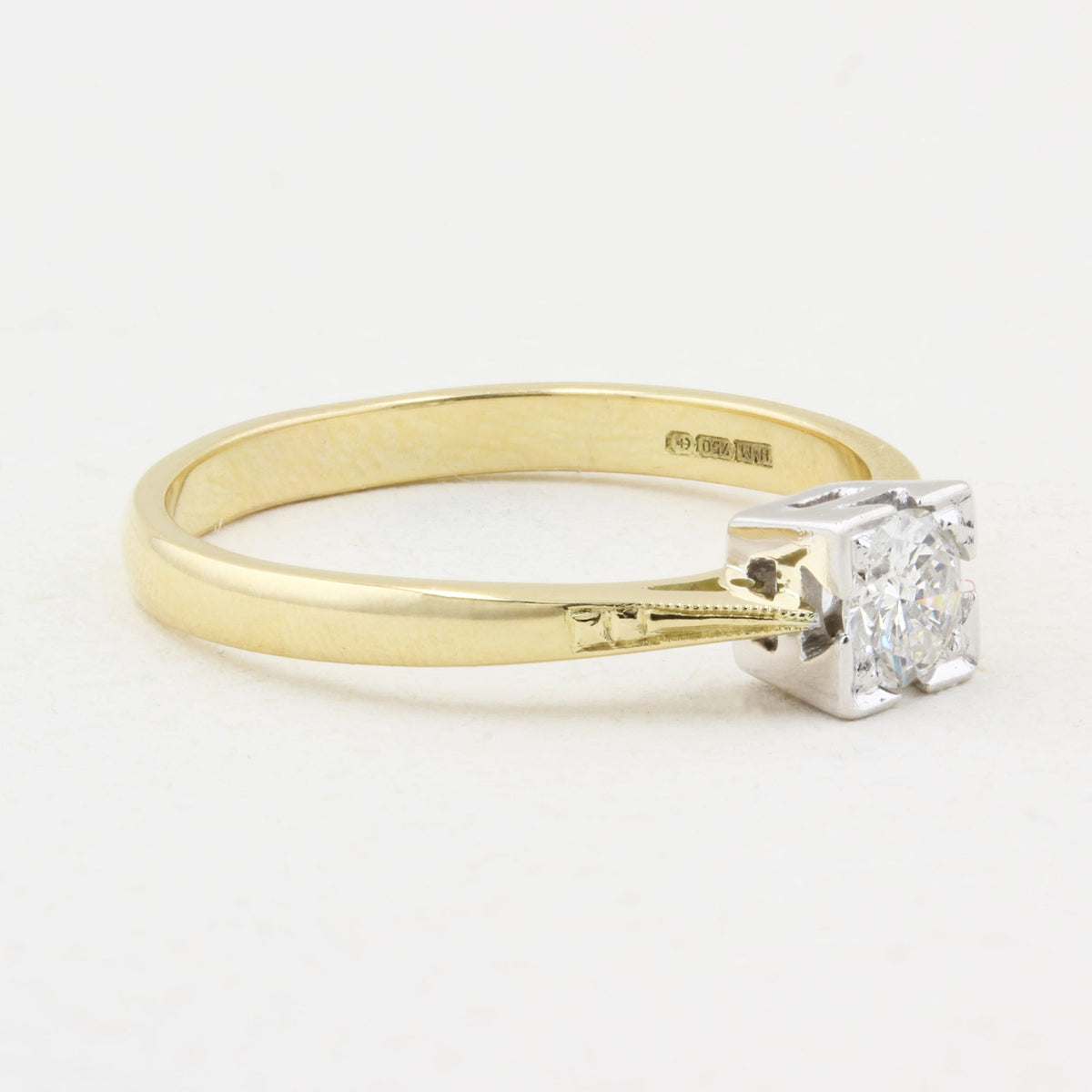
Why Choose a Vintage Engagement Ring?
Vintage rings tend to appeal to people who want something less predictable than a modern solitaire.
Many feature hand-finished details such as milgrain edges, engraved shoulders, geometric settings or delicate diamond surrounds. Older diamonds and gemstones may also have cuts and proportions that are rarely seen in newly made jewellery.
Because many genuine vintage rings are one of a kind, there is also less chance of finding the same design elsewhere.
Pre-owned and vintage engagement rings can offer excellent value too. However, price should always be considered alongside the quality of the stones, workmanship, condition and rarity of the design.
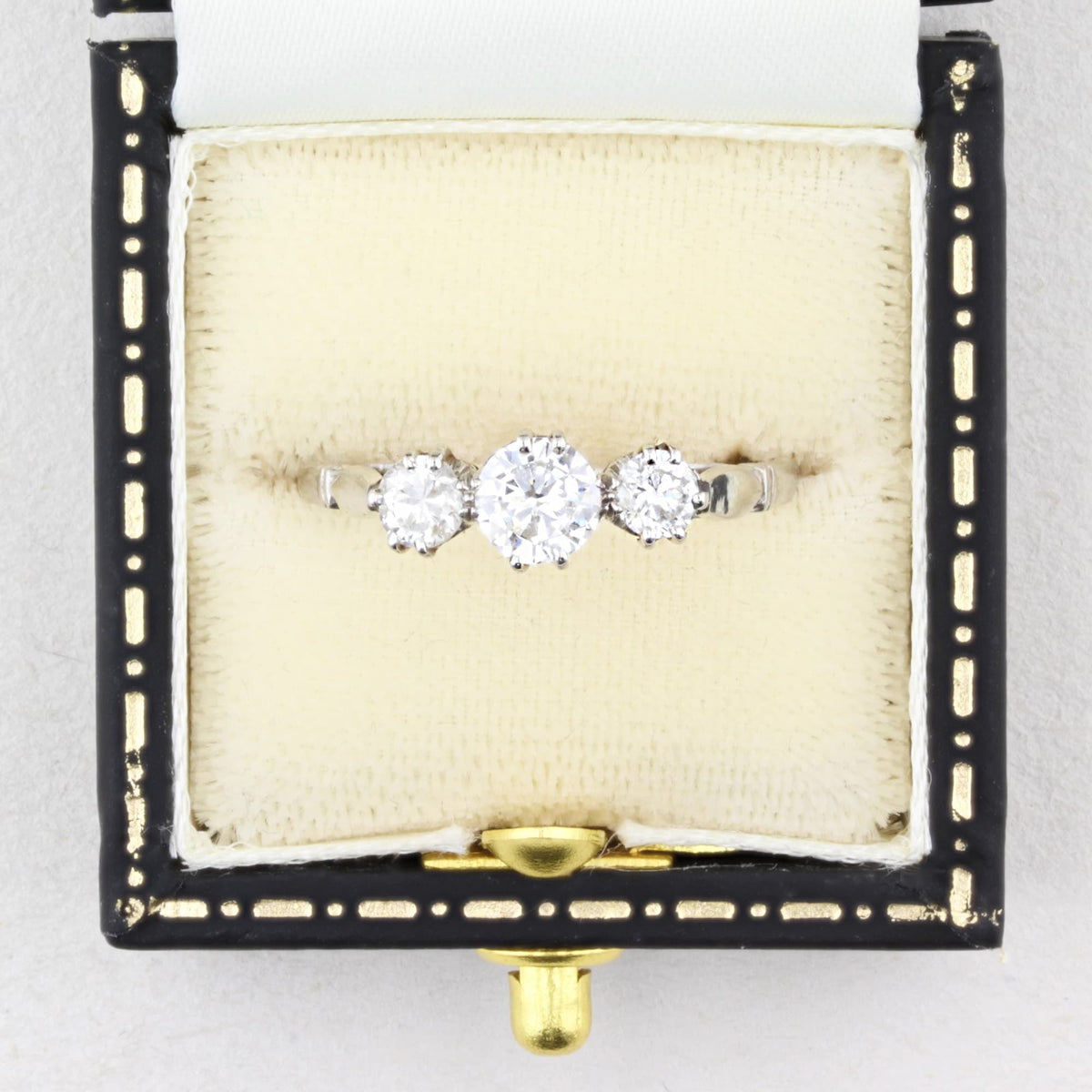
Genuine Vintage or Vintage-Inspired?
This is one of the first decisions to make.
Choose a genuine vintage ring if you value originality, period craftsmanship and the natural signs of age that give an older piece its character.
A newly made vintage-inspired ring may be more suitable if you want a particular design in a specific metal, stone size or ring size. It can also be a practical option when an original period ring is too delicate for the way you intend to wear it.
At Hatton Jewels, we offer original vintage and antique pieces alongside handcrafted designs inspired by historic styles.
Choosing a Period and Style
Victorian Engagement Rings
Victorian rings often have a romantic, decorative appearance. Designs may feature clusters, coloured gemstones, floral details and yellow gold settings.
Edwardian Engagement Rings
Edwardian jewellery is typically lighter and more delicate. Platinum became increasingly popular during this period, allowing jewellers to create fine settings, intricate metalwork and lace-like diamond designs.
Art Deco Engagement Rings
Art Deco rings are known for symmetry, strong lines and geometric shapes. Emerald-cut, Asscher-cut and old-cut diamonds are often paired with calibre-cut sapphires, rubies or emeralds.
Mid-Century Engagement Rings
Rings from the 1940s to the 1960s often combine traditional diamond shapes with bolder settings. These can be a good choice for someone who wants vintage characters without an especially ornate design.
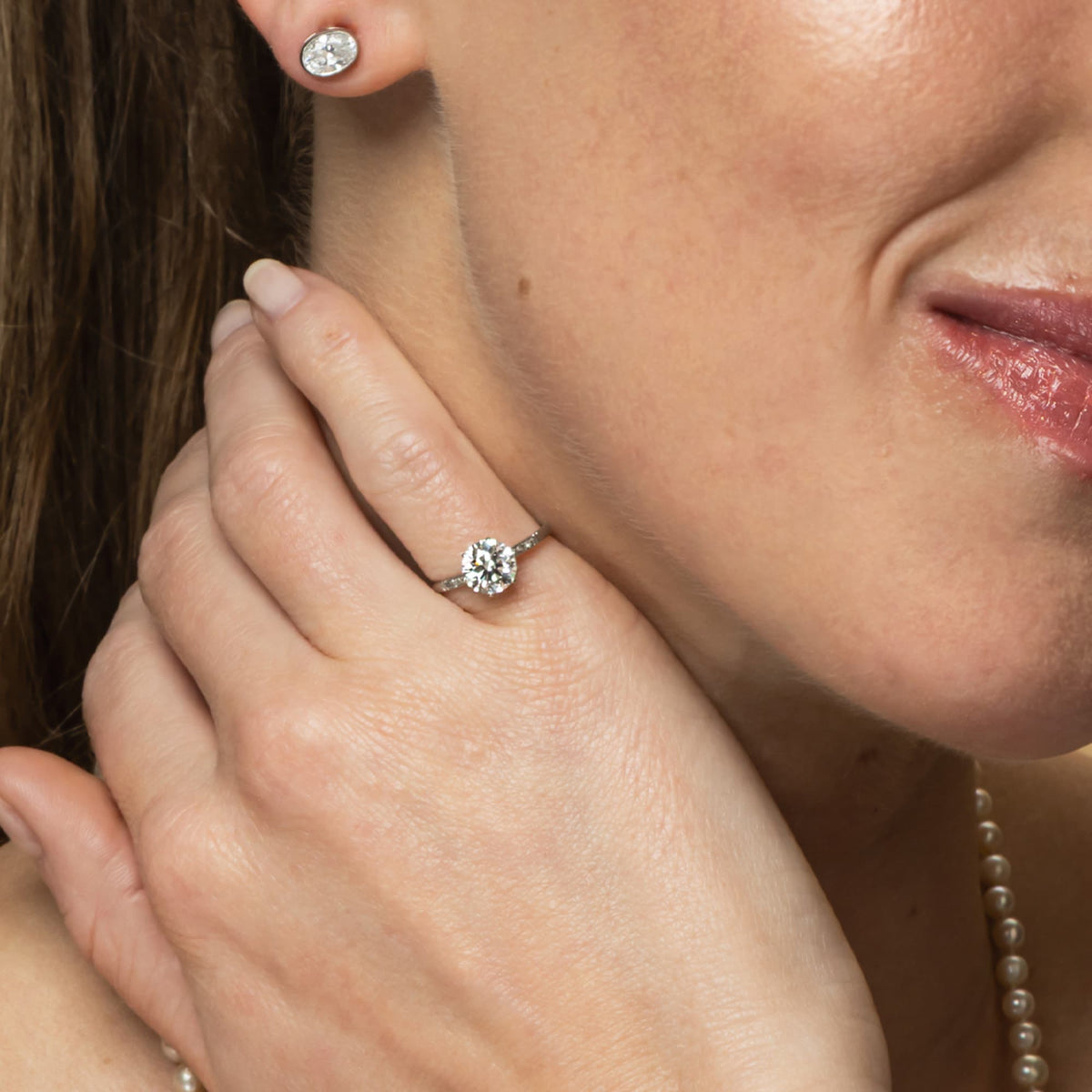
Look Beyond the Carat Weight
The appearance of a vintage diamond can be very different from that of a modern brilliant-cut stone.
Old mine and old European-cut diamonds were shaped by hand, so their facets and proportions are rarely perfectly uniform. Rather than producing the sharp, consistent brilliance associated with a modern cut, they often give off broader flashes of light and a softer glow.
These individual characteristics are part of their appeal. When comparing vintage diamonds, look at how the stone performs in person rather than judging it by the grading report alone.
Check the Condition Carefully
A vintage engagement ring needs to be suitable for regular wear. Signs of age are not necessarily a problem, but structural weaknesses should be addressed before the ring is worn every day.
Check:
- Whether the claws are secure and evenly positioned
- Whether any stones move within their settings
- Whether the band has become thin or misshapen
- Whether previous repairs have been completed properly
- Whether delicate engraving or milgrain remains in good condition
- Whether the ring has been cleaned or restored too aggressively
A reputable jeweller should inspect the ring, explain any restoration work and advise you on future care.
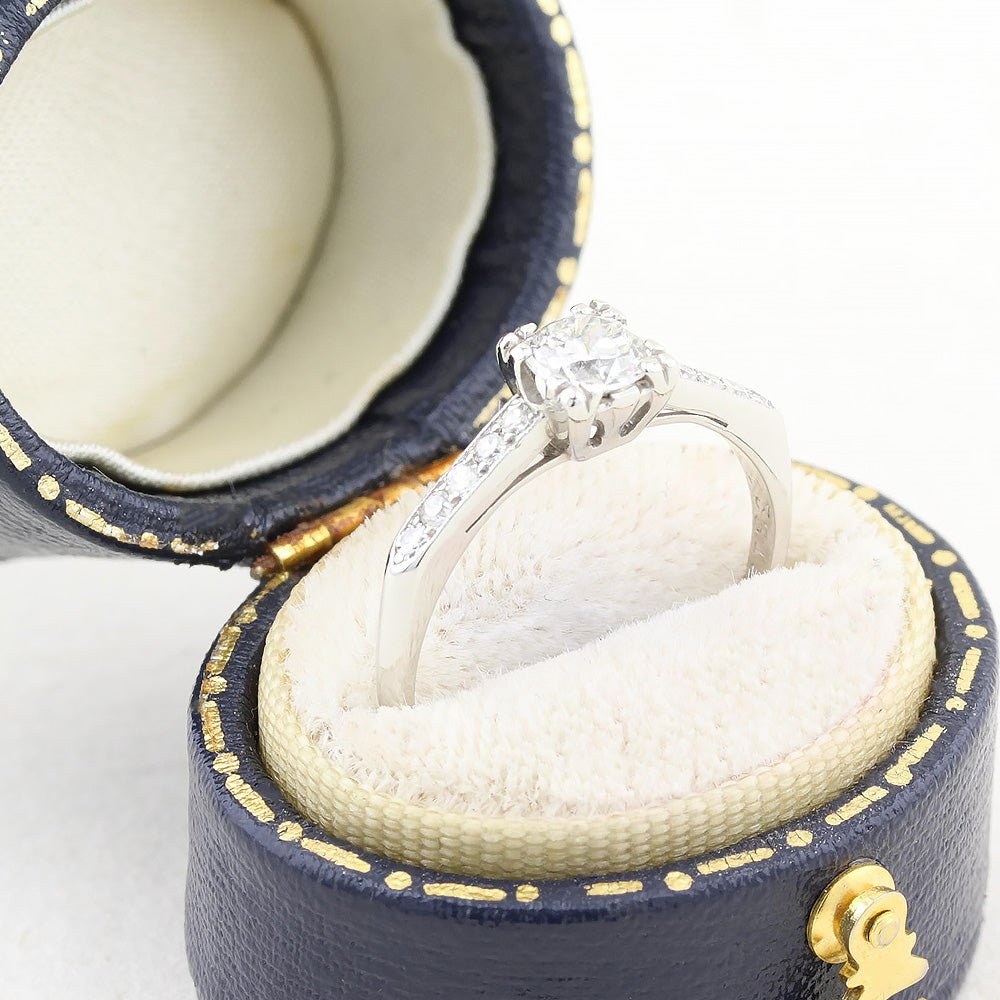
Ask About Resizing
Many vintage engagement rings can be resized, but not every design can be altered significantly.
Diamond-set shoulders, engraving, unusual settings and very thin bands can make resizing more complicated. A large size adjustment may also affect the proportions or strength of the ring.
Always confirm whether the ring can be resized before purchasing it. Where possible, the work should be carried out by a jeweller experienced in vintage and antique pieces.
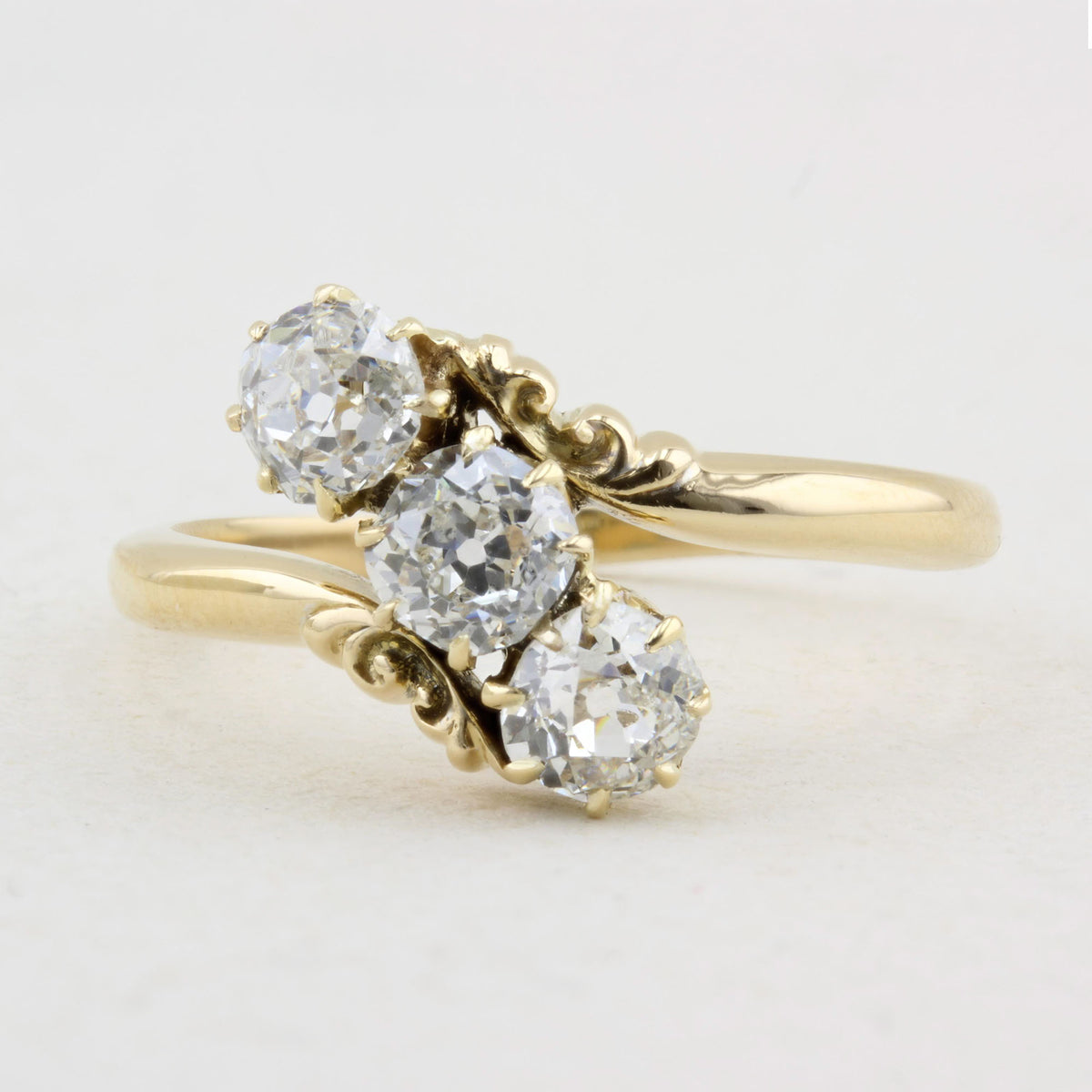
Consider the Wedding Ring
Older engagement rings were not always designed to sit flush against a straight wedding band.
A low setting, cluster design or decorative shoulders may create a small gap between the two rings. Some people like this look, while others prefer to have a shaped or bespoke wedding band made around the engagement ring.
Trying the ring with different wedding band styles before buying can help avoid problems later.
Certificates, Valuations and Provenance
Not every vintage diamond will have an original laboratory certificate. Removing a stone from an older setting for grading can carry unnecessary risk, particularly when the setting is delicate.
-
An independent laboratory report
-
A professional valuation
-
Metal hallmarks
-
Details of previous restoration
-
Information about the approximate period
-
The ring's known ownership or sale history
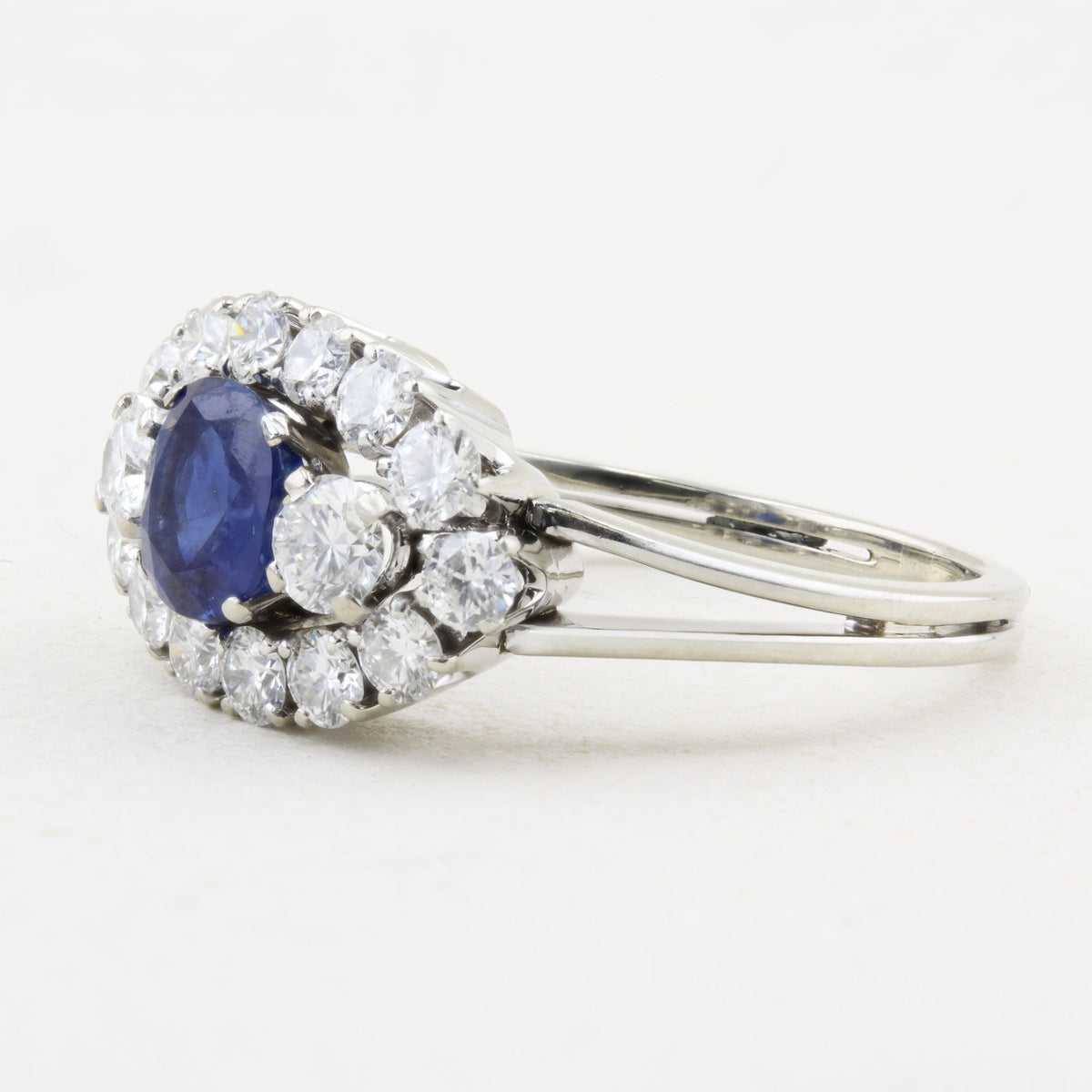
How Much Should You Spend?
There is no standard price for a vintage engagement ring.
Two rings with similar diamond weights may be priced very differently due to their age, condition, gemstone quality, maker, rarity or design. Branded and signed pieces may also carry a premium.
Set a comfortable overall budget, but remain open-minded about carat weight and exact specifications. A smaller old-cut diamond in a beautifully made original setting may have more presence and individuality than a larger stone in a simple modern design.
Questions to Ask Before You Buy
-
How old is the piece believed to be?
-
Has it been inspected by a specialist?
-
Are the stones original?
-
Has it been repaired or restored?
-
Are there any hallmarks?
-
Is it suitable for regular wear?
-
Can it be resized or altered safely?
-
Are there any condition issues to be aware of?
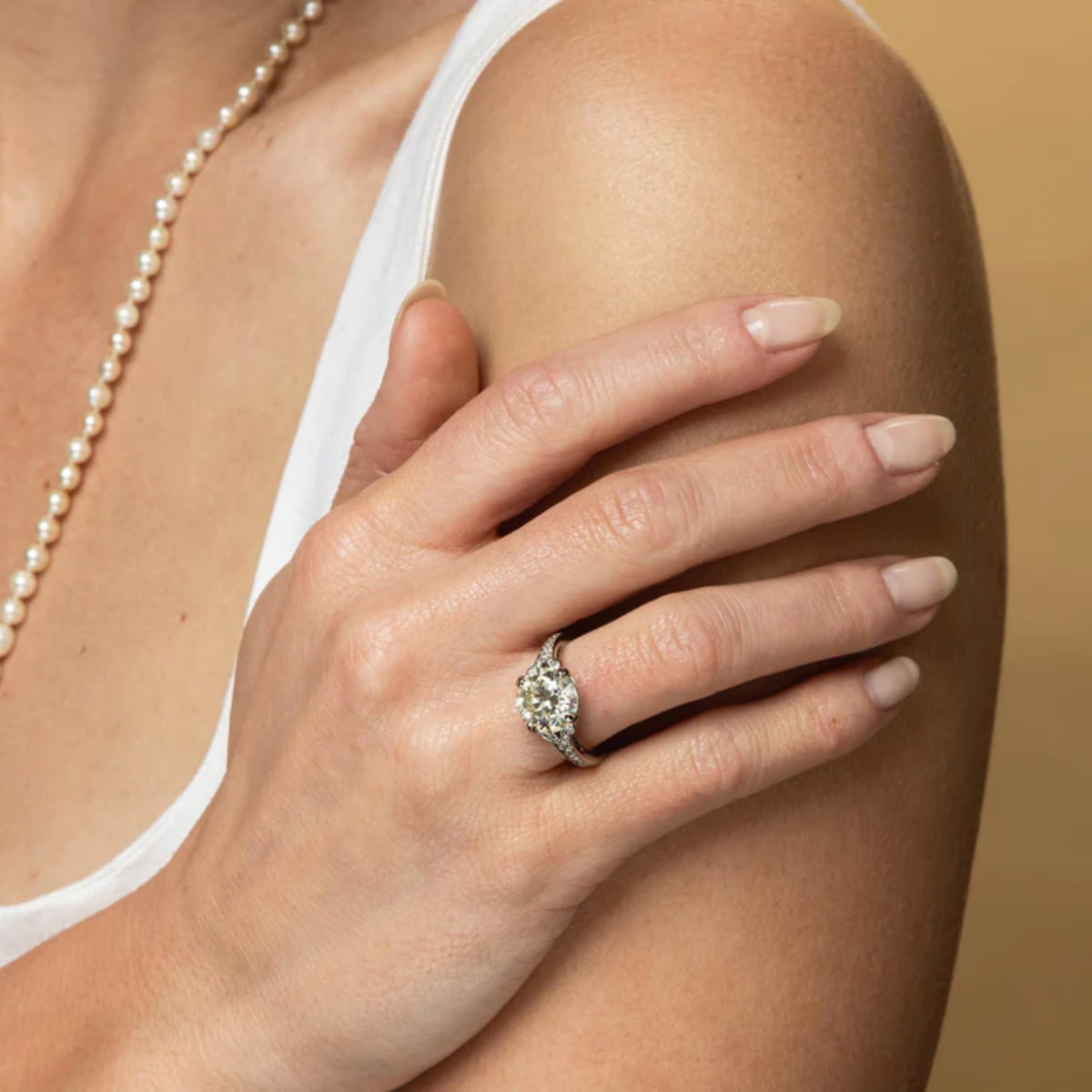
Buying a Vintage Engagement Ring at Hatton Jewels
Every vintage engagement ring should be considered individually. At Hatton Jewels, our jewellery experts inspect each piece, assess its condition and explain any restoration or practical considerations before purchase.
Our private Hatton Garden appointments give you time to compare different periods, stones and settings without pressure. We can also advise on resizing, wedding bands, valuations and bespoke vintage-inspired designs.
Why Buy Antique Jewellery from Hatton Jewels?
At Hatton Jewels, we specialise in fine pre-owned, vintage and antique jewellery from our showroom in Hatton Garden, London.
Every piece is carefully assessed before being offered for sale, with attention given to quality, condition, authenticity and wearability. Our team includes experienced jewellery specialists, valuers and gemmologists who work closely with antique, vintage and fine jewellery every day.
Whether you are choosing an antique engagement ring, a period bracelet, a pair of old-cut diamond earrings or a one-off coloured gemstone piece, we can help you understand what you are buying and why it is special.
Frequently Asked Questions
Are vintage engagement rings suitable for everyday wear?
Many are, provided the setting is secure and the ring is in good structural condition. More delicate pieces may require additional care or occasional wear.
Can a vintage engagement ring be resized?
Often, yes. However, the amount it can be resized depends on the setting, metalwork and design of the band.
What is the difference between vintage and antique engagement rings?
Vintage rings are generally between 20 and 99 years old. Antique rings are usually at least 100 years old.
Are vintage engagement rings always pre-owned?
A genuine vintage ring will normally have had a previous owner. Newly made rings that recreate older styles should be described as vintage-inspired rather than vintage.
Can I recreate a vintage engagement ring?
Yes. A bespoke vintage-inspired ring can recreate elements such as milgrain, engraving, geometric settings or old-cut diamonds while being made to your preferred size and specification.
